


Bird School Project · Jan – Mar 2020
Bird School Project
Custom field guides that transformed how middle schoolers engage with bird identification
- In short
- Illustrated and designed two kids’ field guides with 30+ hand-drawn watercolors for an outdoor science curriculum.
- My role
- Sole designer, illustrator and writer
- Timeline
- 6 months
- Focus
- Education, Illustration, End-to-end lifecycle
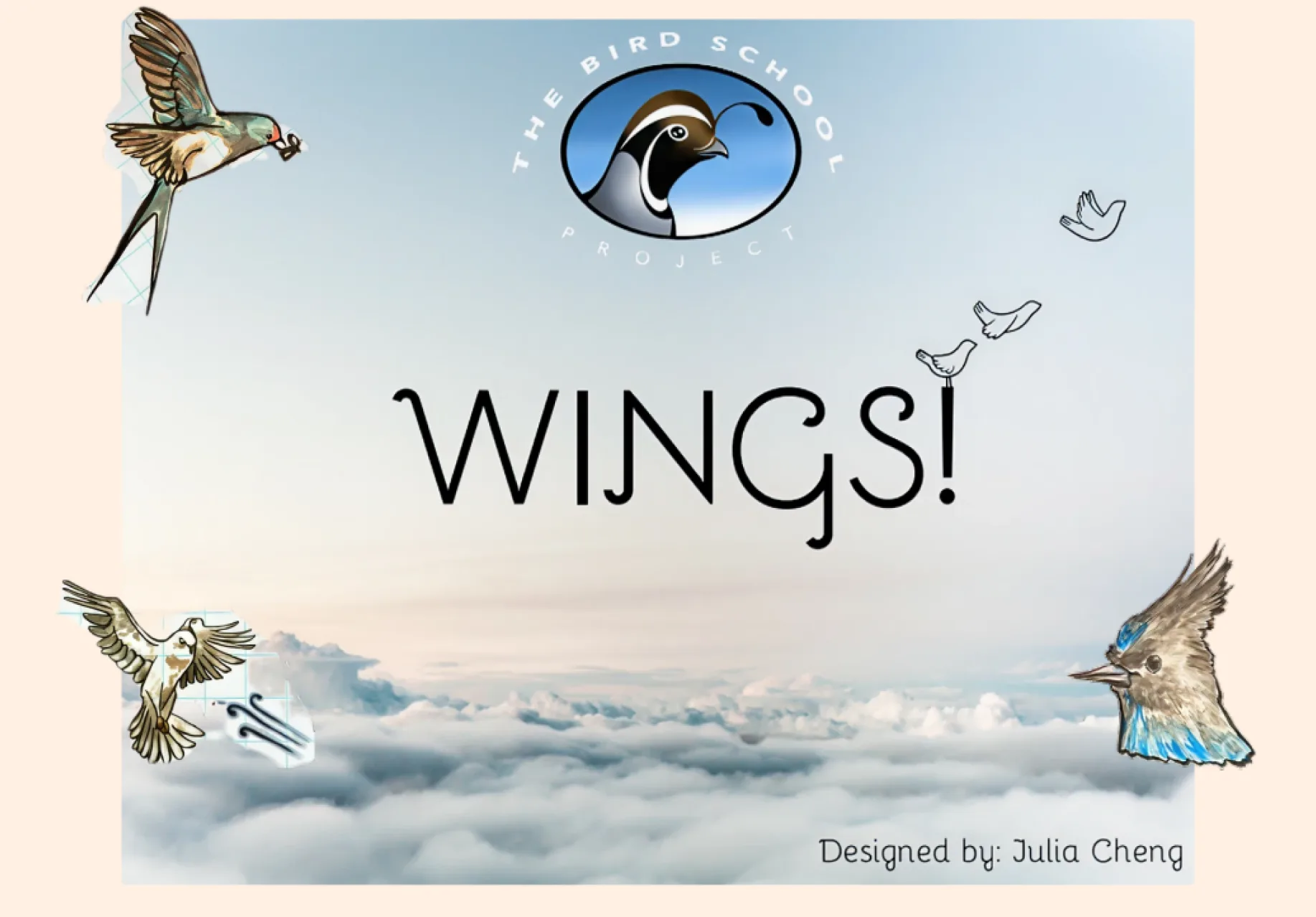
I noticed the field guides we taught with weren’t working for middle schoolers, so I pitched the Bird School Project on 2 custom, kid-friendly guides for their curriculum. As the sole designer over 6 months, I handled everything from illustration and content writing to the finished guides.
Context
Context
Middle schoolers, birdwatching, and field guides written for adults.
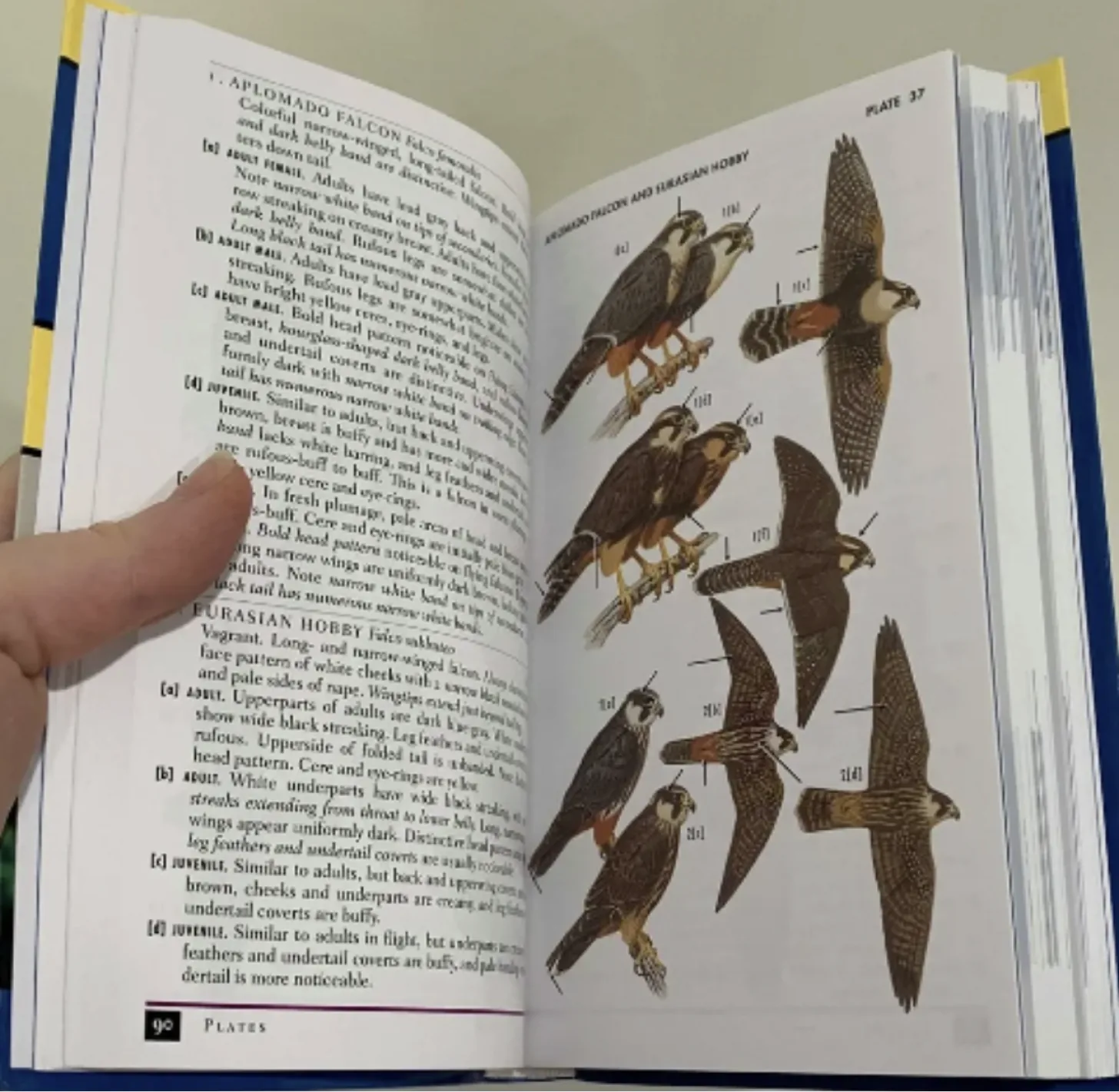
During my internship with the Bird School Project (BSP), I worked as an outdoor education instructor, teaching middle schoolers scientific thinking through birdwatching. Students used field guides during outdoor observation sessions, but the existing materials (dense ornithology guides with small text) weren’t engaging for this age group.
Problem
Noticing a problem
Students tuned out the books but leaned in when I sketched.
I noticed students’ attention was most likely to wander during indoor classroom sessions. Walking around to check on groups, I realized our teaching materials weren’t working well for this age group: mostly dense ornithology field guides and natural history books with small text that weren’t kid-friendly.
When I carried my small sketchbook for personal notes, kids showed more interest and willingness to engage. I saw the same thing during outdoor sessions when I sketched observations alongside students. After seeing my sketches of the birds we observed, students got more excited about making and sharing their own observations. My supervisor had noticed the difference too, and commented on how my sketches captured students’ attention.
Opportunity
The opportunity
Two kid-friendly field guides, scoped to fit three months.
When my internship ended, my supervisor Kevin and I discussed creating custom field guide booklets to complement the course units. Since existing educational materials didn’t appeal to younger audiences, we decided to develop kid-friendly field guides that both BSP and the general public could use.
We started at the beginning of the next school year, first deciding what was realistic to finish in 3 months. We settled on 2 units: Wings and Feathers.
Design Process
Planning and research
Paper first, because it feels less final.
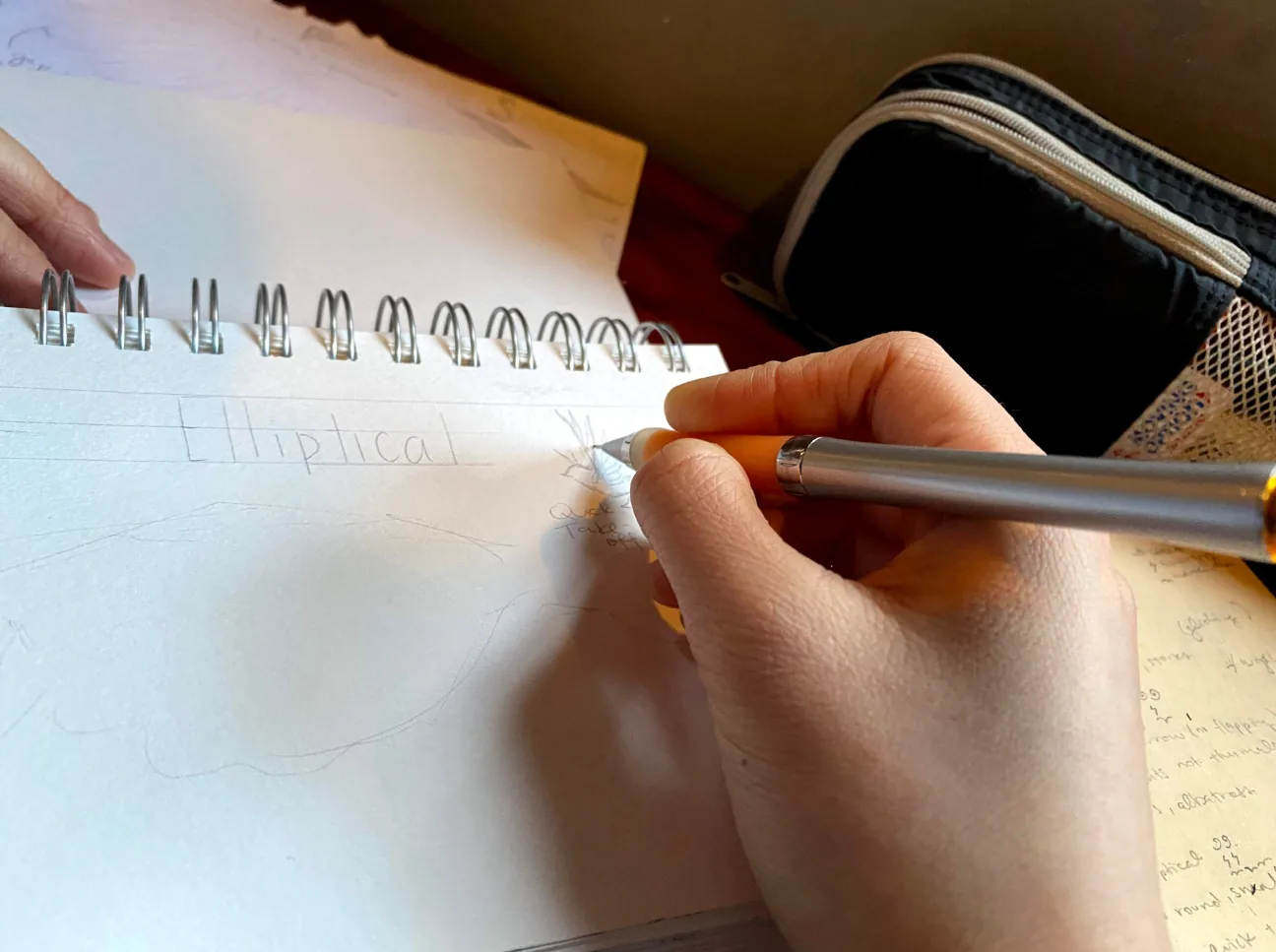
I made small thumbnail sketches and drew on my experience as an intern to decide what information to include and how to structure it. I was responsible for all the illustration, design, and content writing.
Creating the illustrations
30+ watercolors, painted from real specimens.
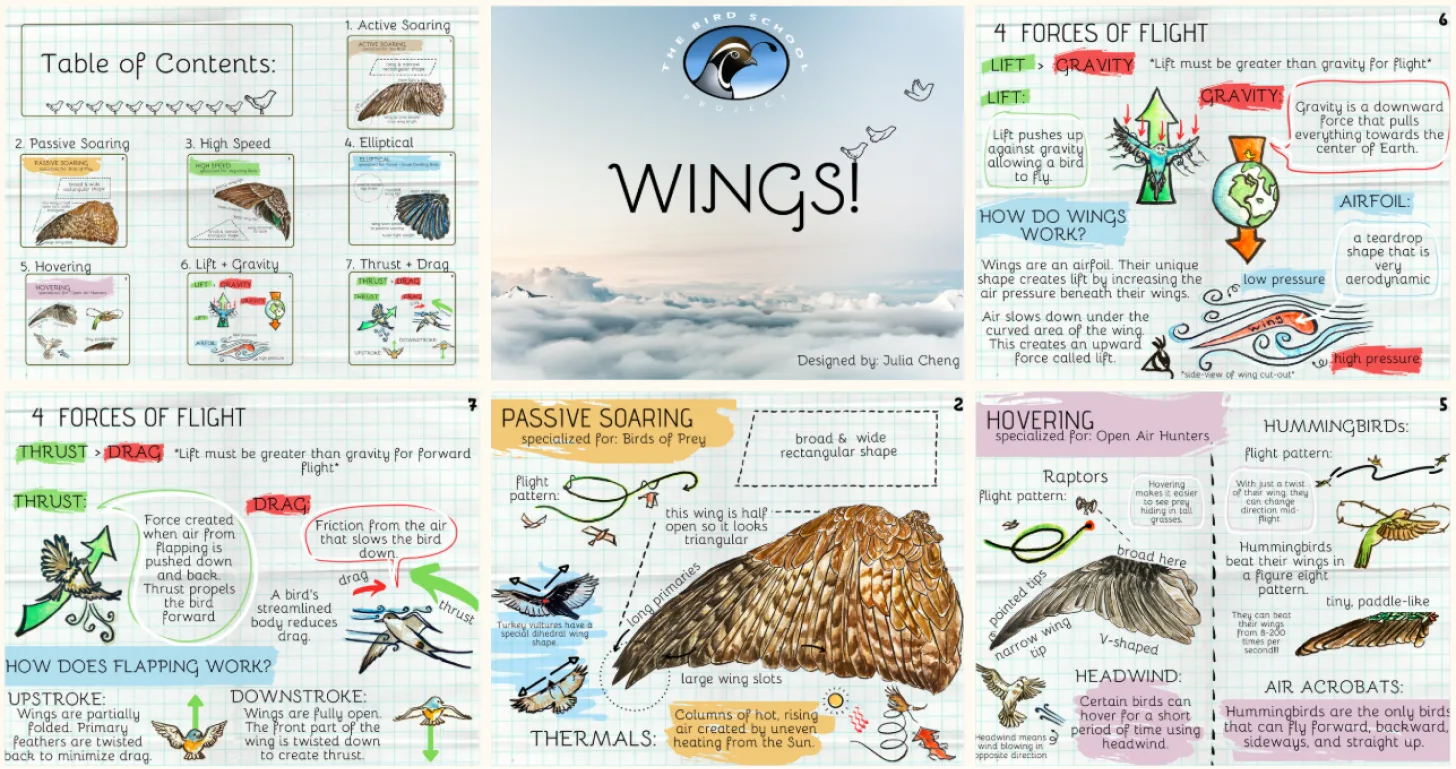
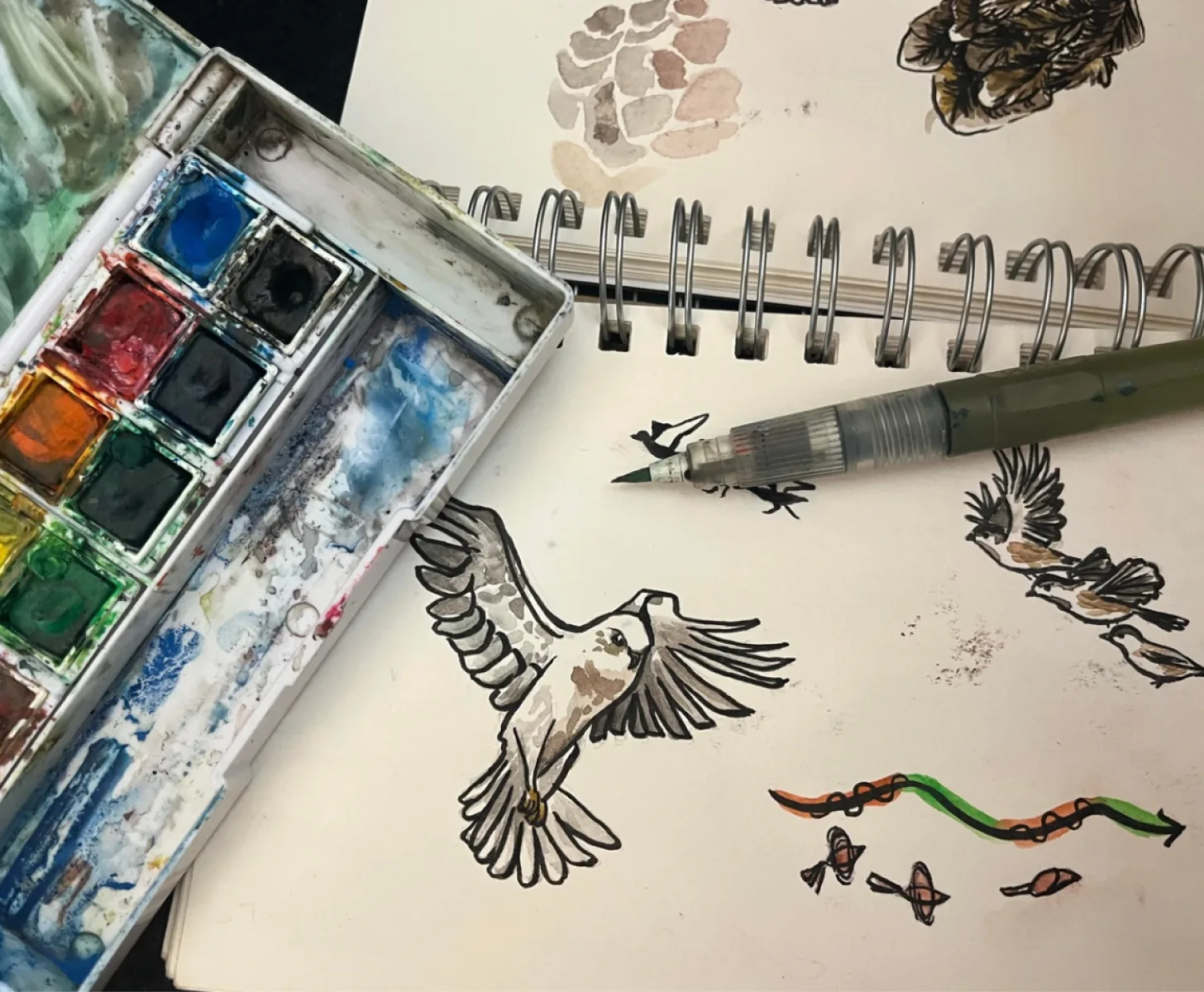
I created over 30 watercolor paintings of birds, wings, and feathers, working from real specimens: taxidermied materials from the natural history museum. I chose to draw and color the illustrations by hand on paper to get a natural sketchbook look, then scanned them and arranged them digitally in Canva.
Working within constraints
A small page forces a clear message.
The small page size actually helped focus the content. I could only fit a title, a fun fact, and text labels next to the illustrations, and that constraint forced me to be concise and clear.
Challenges
Information architecture
Big ideas, broken into page-sized pieces.
Creating educational content for middle schoolers meant balancing visual appeal with information density. My guides were reviewed by educators from BEETLES, a science teaching organization for field instructors. Their feedback on the content was positive, but the visual design and page layouts needed work. Through multiple iterations, I refined three key areas.
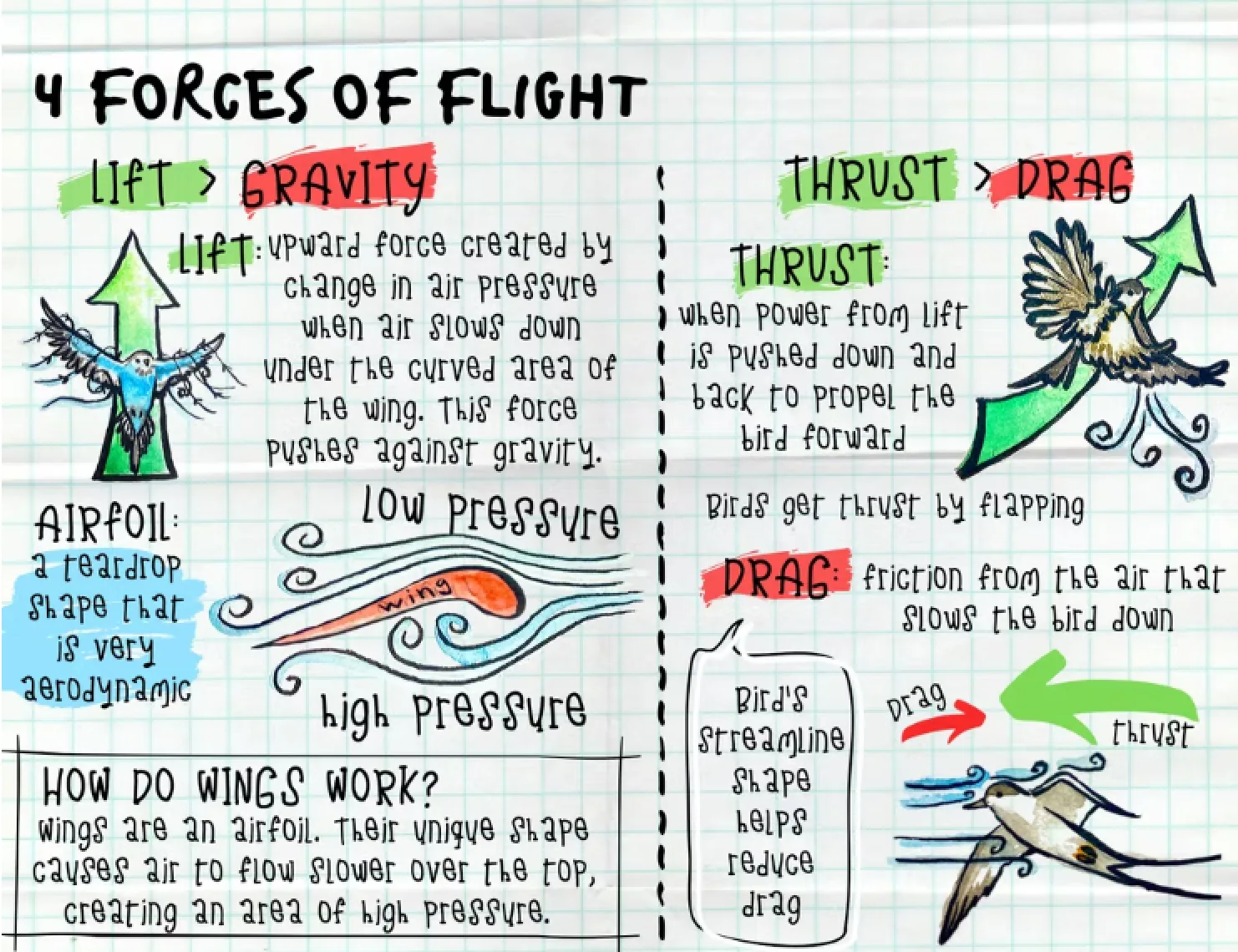
Complex concepts like flight physics needed to be broken into digestible chunks. I split the “4 Forces of Flight” from one crowded page into two focused spreads, so each force (lift, gravity, thrust, drag) gets a clear explanation with supporting illustrations.
Visual hierarchy
Fewer colors and fonts, so the content leads.
My initial designs used too many bright colors and competing fonts that distracted from the content. I developed a clearer system, using color blocks to separate types of information and consistent typography to improve readability.
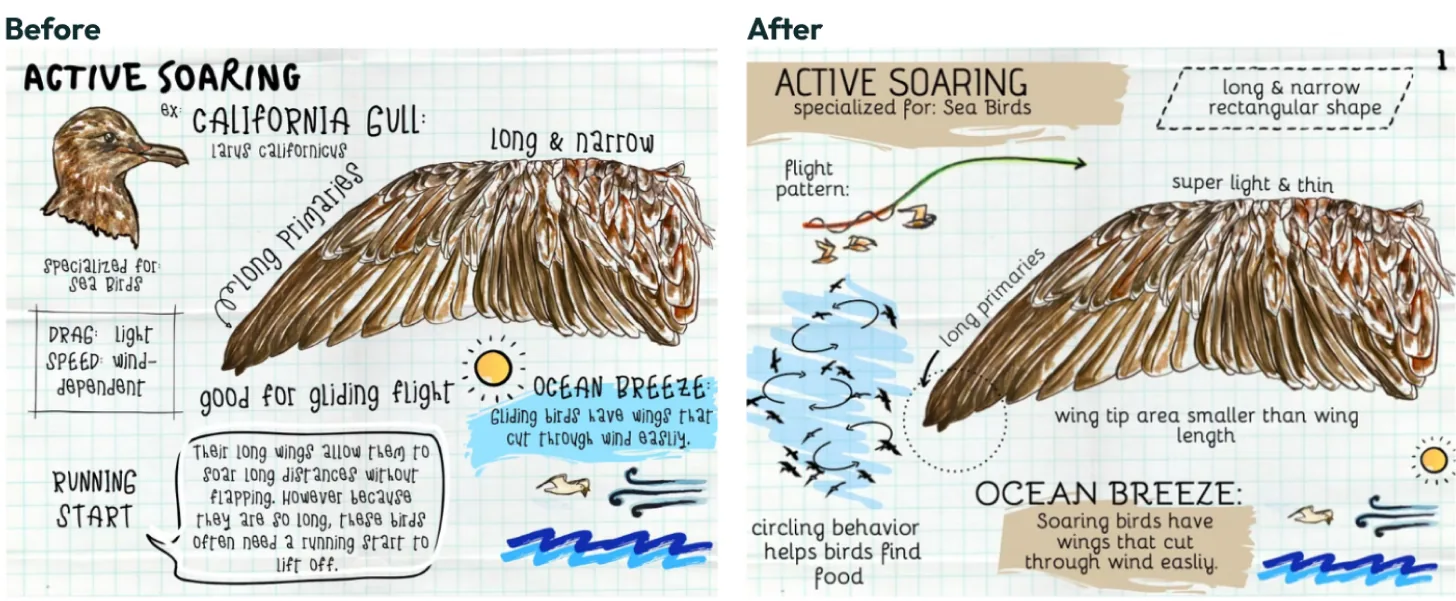
Content depth
Clear illustrations with short labels beat paragraphs.
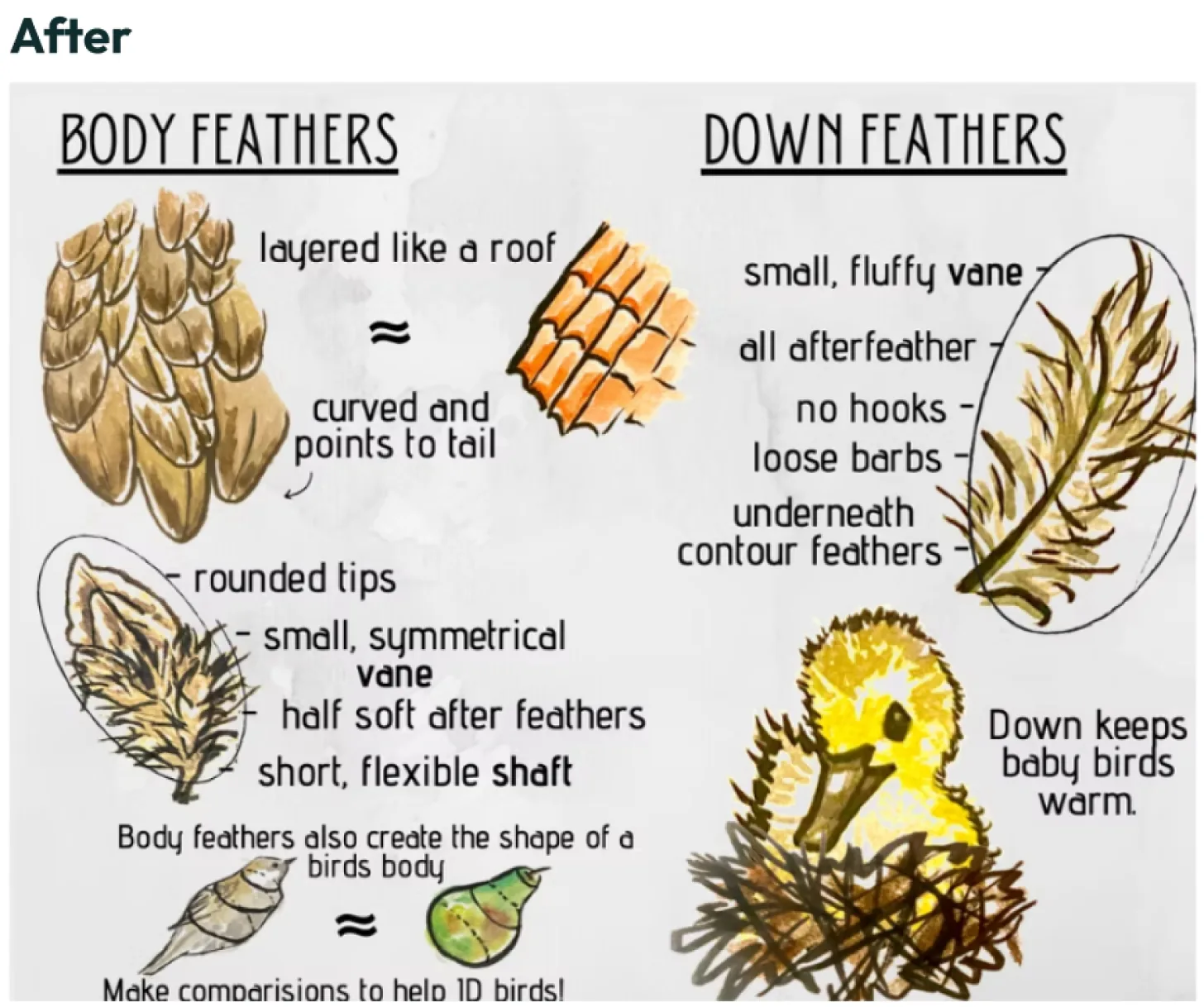
I struggled with unfamiliar feather content and at first relied too heavily on text. Feedback from the BEETLES educators helped me see that clear illustrations with concise labels worked better than paragraph explanations. I also learned to remove information that wasn’t directly useful for identifying birds in the field.
Through multiple review rounds, I learned that designing educational content takes a deep understanding of the subject. The quality difference between my Wings and Feathers guides reflected this: better content knowledge enabled more creative, clearer design.
Key Learnings
Key learnings
Know the content first; the design gets better because of it.
- Content knowledge matters. You need to prepare and fully understand your content before designing. The quality difference between my Wings and Feathers guides showed this: better content knowledge led to more creative design solutions.
- Typography and information hierarchy. Font choices make a huge difference in readability and visual appeal. This project taught me to plan how readers engage with information through sizing, bold text, color blocks, and spatial arrangement.
- Design iteration. I experienced how hard it is to balance visual appeal with clear communication, and learned that finding the right middle ground takes multiple iterations.
Results
Results and impact
Award-winning guides that became part of BSP’s official lessons.
The project produced two digital, 7-page field guides that are easy to read, practical for indoor and outdoor use, and complement BSP’s curriculum.
The guides won the Webster Fellows Award ($1,500) for advancing natural history education: recognition from the UC Natural Reserve System for work that makes science education more accessible.
The timing proved fortunate for BSP. When COVID-19 forced the program online, the digital Wings guide became essential for remote teaching, and the BSP curriculum director noted its value for online student interaction and bird identification. The Wings guide is now part of the official BSP lesson sequence on the Santa Cruz Office of Education website (Seventh Grade › Lesson 3: Bird Wings Discovery Swap › Slide 6).